Three villains, five missing Emeralds and one very confused echidna. Aspect’s third 8-bit Sonic platformer brings in Fang the Sniper and plays more like the Mega Drive games than any handheld Sonic before it.
Released11 Nov 1994 (JP) · November 1994 (US, Europe)
DeveloperAspect, for Sega
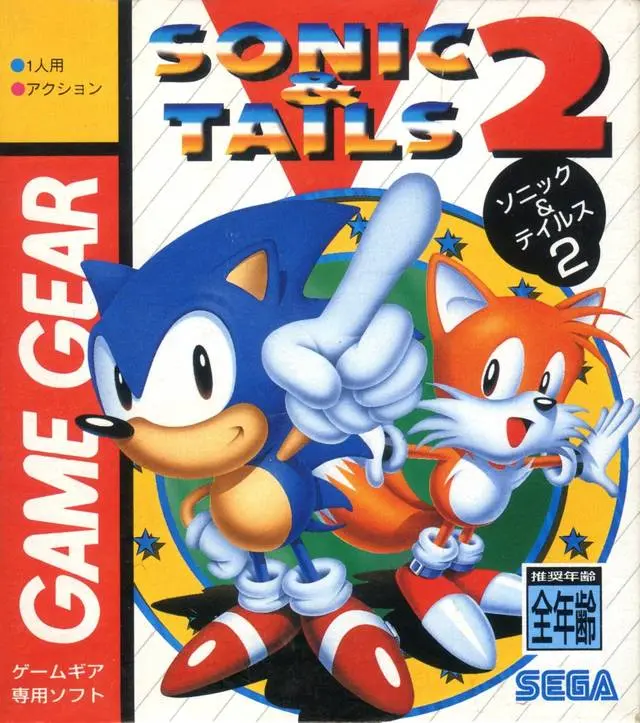
Japanese titleSonic & Tails 2
ZonesSix, three acts each
Players1
DebutFang the Sniper (Nack the Weasel)
Title
Sonic the Hedgehog: Triple Trouble Japan: ソニック&テイルス2 (Sonic & Tails 2)
Platform
Sega Game Gear (no Master System release)
Developer
Aspect
Publisher
Sega (Sega of America in North America, Sega Europe in Europe)
Producer
M.Hoko
Director
K.Hase
Planning and setting
Tadashi Ihoroi (credited as T.Ihoroi)
Composer
Yayoi.F; sound driver by Tokuhiko Uwabo
Fang design
Shinichi Higashi
Players
1
Released (Japan)
11 November 1994 (¥3,800, G-3356)
Released (North America)
November 1994 (product code 2530)
Released (Europe)
November 1994 (UK £24.99)
Released (Brazil)
October 1995 (Tec Toy)
Virtual Console
Nintendo 3DS: 14 March 2012 (Japan), 15 March 2012 (North America), 29 March 2012 (Europe)
Collections
Sonic Adventure DX: Director’s Cut, Sonic Gems Collection (2005), Sonic Origins Plus (2023)
Sonic the Hedgehog: Triple Trouble is the third of Aspect’s four 8-bit Sonic platformers and the follow-up to Sonic Chaos. It came out on the Game Gear in November 1994, as Sonic & Tails 2 in Japan, a few weeks after Sonic & Knuckles arrived on the Mega Drive. A Master System version seems to have been planned but never appeared.
The three troublemakers of the title are Dr. Eggman, a Knuckles who has been fooled again, and a brand-new rival: Fang the Sniper, a treasure hunter on a flying bike, renamed Nack the Weasel for the West. Sonic and Tails are both playable, both can win Chaos Emeralds this time, and each gets toys of his own, from a snowboard and propeller shoes to a personal submarine.
Aspect built it for the Game Gear first, so the levels fit the small screen, and the result plays more like the Mega Drive games than any handheld Sonic before it. Bigger levels, softer ring loss and a Time Attack mode have won it plenty of fans since, even if 1994’s reviewers were split.
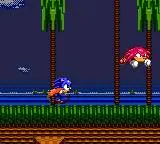
Knuckles gets in the way in Great Turquoise.Robotnik Winter.Tails in his Sea Fox submarine.
The Race is On!
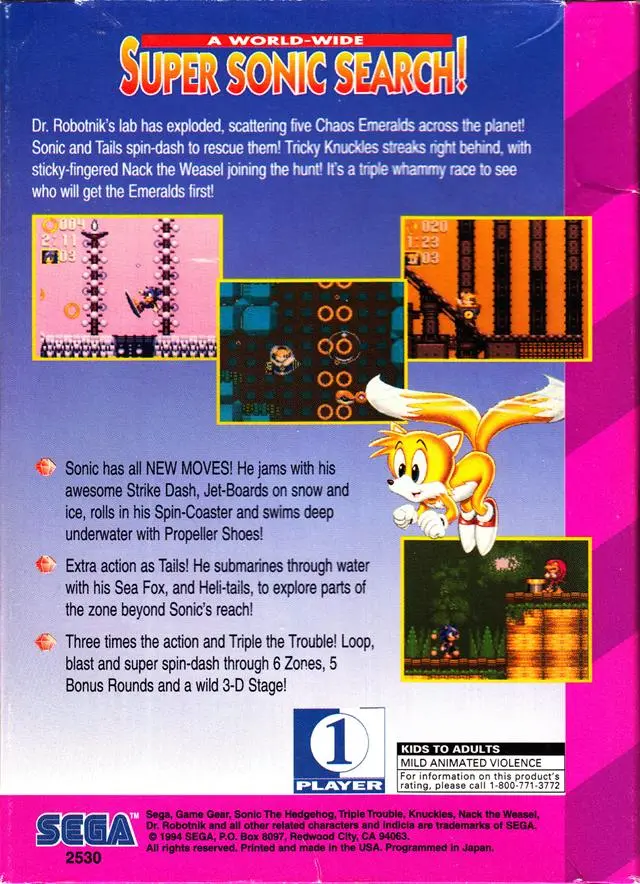
That headline opens the story in Sega of America’s Game Gear manual. In its telling, one of Dr. Robotnik’s assistants slips up while the doctor is testing his ultimate destructive weapon, and the blast scatters five Chaos Emeralds across the planet Mobius, starting a high-speed Emerald hunt. It then lines up the heroes and the “Triple Trouble”: Robotnik with the one Emerald he kept, a tricked Knuckles, and the treasure hunter Nack the Weasel on his airbike.
— Official description: Sega of America, Sonic the Hedgehog Triple Trouble Game Gear instruction manual (1994), as transcribed by Sonic Retro. One line quoted; the rest summarised.
Quick Answers
The questions people ask about Triple Trouble, answered first and explained further down.
When did Sonic Triple Trouble come out?
On 11 November 1994 in Japan, where it is called Sonic & Tails 2, and in November 1994 in North America and Europe. More →
Is Triple Trouble on the Master System?
No. It was only released on the Game Gear, although a Master System version appears to have been planned. A fan-made Master System conversion appeared in 2009. More →
Who are the three in Triple Trouble?
Dr. Eggman, Knuckles, who Eggman has tricked into fighting Sonic and Tails, and Fang the Sniper, a treasure hunter after the Chaos Emeralds. In the West Fang was called Nack the Weasel. More →
Who is Fang the Sniper?
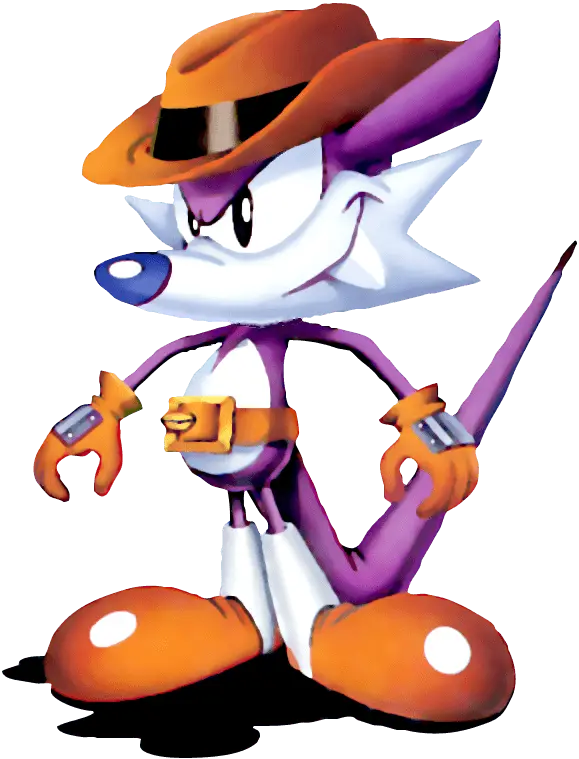
A treasure hunter from subspace with a cowboy hat, a big fang and a flying bike, created for this game by Shinichi Higashi. He is Nack the Weasel in the Western release and has gone by Fang the Hunter since Sonic Superstars (2023). More →
Can you play as Tails?
Yes. Pick Sonic or Tails at the start. Unlike in Sonic Chaos, both can enter the Special Stages and collect the Chaos Emeralds. More →
How do you get to a Special Stage?
Find the Chaos Emerald monitor hidden in Act 1 or 2 of a zone and break it while holding at least 50 rings. A ring of stars appears; jump in. More →
How many zones are there?
Six, starting at Great Turquoise and running through Sunset Park, Meta Junglira and Robotnik Winter to Tidal Plant and, finally, Atomic Destroyer. Each has two acts and a boss act. More →
Is there a level select?
Yes. Hold Up as you switch the Game Gear on, then press Start just as Knuckles grabs Emerald number three during the opening. A ring sound confirms it. More →
What happens to your rings when you get hit?
You only lose some of them: 30 for most hits and 50 for spikes. Triple Trouble was the first Sonic game to work this way. More →
Where can I play it today?
It is one of the twelve Game Gear games in Sonic Origins Plus (2023). It was also on the Nintendo 3DS Virtual Console from 2012. More →
Plot / Story
Fang the Sniper, the West’s Nack the Weasel, in Sega’s artwork.
The title is the plot. This time Sonic and Tails face three opponents at once, and each of them wants the Chaos Emeralds for a different reason.
Trouble number one is self-inflicted. Eggman had secretly gathered all six Emeralds to power his ultimate weapon, and the test blew up in his face. The Japanese manual opens on his wail of panic and makes it his own mistake; Sega of America blames one of his assistants. Either way the gems are flung far and wide, and he manages to recover just one.
Trouble number two is a misunderstanding. Knuckles, the Emerald guardian from Sonic 3, jumps the heroes without a word of explanation, because Eggman has once again convinced him that Sonic and Tails are the ones out to rule the world.
Trouble number three is plain greed. Fang the Sniper, Nack the Weasel in the West, has pocketed the five missing gems and hidden them in subspace, the strange dimension he calls home. He has no idea what they can do and does not care; to him they are loot to sell. Sonic, in the Japanese booklet, is not worried. A little courage, he says, and he can do anything.
Across Mobius, or South Island, depending on your manual
Western manuals set the chase on the planet Mobius, the name Sega of America used in those days. The route runs through six zones, and the damage from Eggman’s weapon test is everywhere: Robotnik Winter, the Japanese manual explains, froze over because the doctor tested his weapon there. Tidal Plant is a power station, probably built to feed his latest creation, and that creation is the final zone itself, the Atomic Destroyer, which the American manual describes as an enormous superweapon.
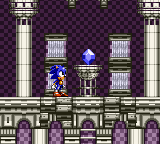
Getting five of the gems back means a detour. Smash the Emerald monitor tucked away in each of the first two acts while carrying 50 rings or more, and a ring of stars carries you off to a Special Stage: either a side-scrolling obstacle course (there are three) or a 3D ring hunt at the controls of the Tornado (two). Fang keeps popping up to make a nuisance of himself, and Knuckles blocks the way until the heroes have to fight him in Tidal Plant.
Eggman’s handmade robot, Metal Sonic, is waiting too. In the Atomic Destroyer the bosses come one after another before the final showdown, and the sixth Emerald comes from the doctor himself once he is beaten.
Eggman sets things in motion.An Emerald room.Fang on his flying bike.
Zones in Triple Trouble
Six zones, each made of two full acts plus a brief boss act. Zones are bigger than in Sonic Chaos, and some acts have their own vehicle or power-up.
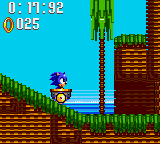
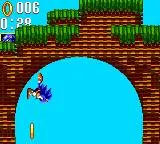
Great Turquoise ZoneActs 1–3 · boss: Tart TurtleThe opener keeps its secrets up high, because the palm-tree tops are springs. In Act 1 the Emerald monitor sits right at the top of the end of the act, and bouncing through the trees is the way up.
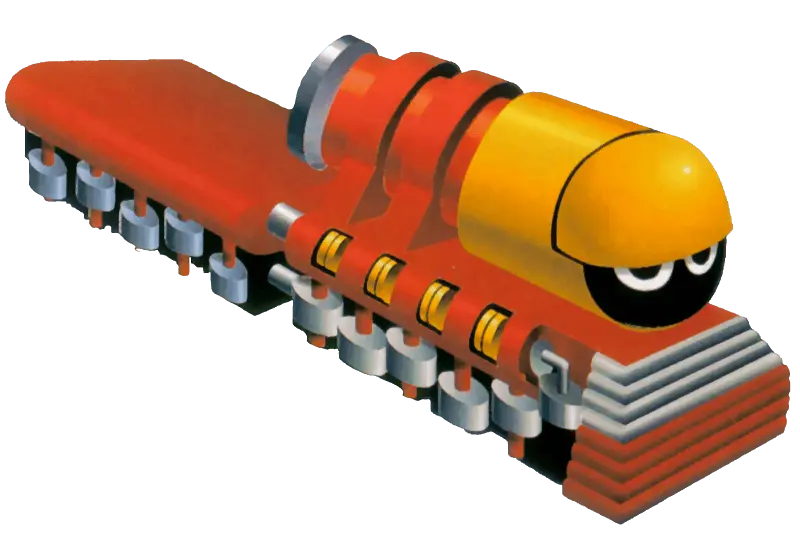
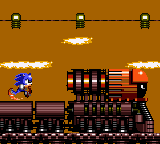
Sunset Park ZoneActs 1–3 · boss: Marve Shupopolus-GouA theme park gone to seed. Knock a Ladybuggy out of its coaster car and drive it yourself, through walls and spikes alike. Act 2 has the strangest finish in the game: you step onto a robot freight train, spin the Bonus Panel on its roof and roll straight into Act 3.
Meta Junglira ZoneActs 1–3 · boss: Wood ButtarundorfThe name probably plays on Shangri-La, but nothing here is restful. Keep hopping through the swamp mud or it swallows you, and expect the glass balls in the trees to bat you back down.
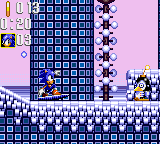
Robotnik Winter ZoneActs 1–3 · boss: Giga Thomas “Pen”The weather is the doctor’s fault, since his weapon test froze the place, and even the Japanese release calls it Robotnik Winter, from before Japan used Robotnik as Eggman’s surname. Sonic gets the Jet Board here.
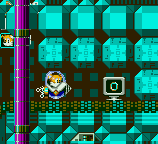
Tidal Plant ZoneActs 1–3 · boss: KnucklesEggman’s tidal power station, probably there to run the Atomic Destroyer. The fun is in the kit: Propeller Shoes let Sonic swim for a while, and Tails drives the Sea Fox, the submarine that went on to star in Tails Adventures.
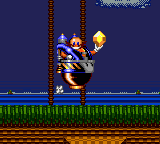
Atomic Destroyer ZoneActs 1–3 · boss: Dr. EggmanThe weapon itself. Tube mazes keep dropping you onto switches that start Mecha Hiyoko generators, and Act 3 is one boss after another.
The Special Stages are separate: three side-scrolling courses and two 3D flights in the Tornado.
Sonic the Hedgehog Triple Trouble (special)Archie Comics · US · 1995The third of Archie’s Sonic Specials, written by Mike Gallagher and Ken Penders with a cover by Patrick Spaziante. A botched experiment splits Robotnik’s Emerald in two, a bounty hunter (Nack) is hired to fetch the halves, one shard creates a new zone called Triple Trouble, and the other buries itself in a mountain on Knuckles’ Floating Island. Vector and Octobot also appear.
Sonic the Comic #43Fleetway · UK · cover date 20 January 1995The Review Zone took on Sonic & Knuckles and Triple Trouble in the same issue, and gave Triple Trouble 87%.
The Famicom Tsushin naming contestJapan · 1994Sonic’s new rival was known as Nack during development. Because that sounded too much like Knuckles in Japanese, the magazine Famicom Tsushin ran a contest to name him, and Fang the Sniper won.
Sonic Superstars tie-in comicSonic Superstars · 2023When Fang returned in Sonic Superstars as Fang the Hunter, the accompanying comic explained that Nack, Fang the Sniper and his other names had all been aliases to cover his tracks.
Characters
The biggest cast of any 8-bit Sonic: two heroes, three troublemakers and Eggman’s robot double.
Character
Who they are
In this game
Stats & abilities
Sonic the HedgehogPlayable hero
Sega’s blue mascot, here in his fourth 8-bit platformer. Sega of America’s manual crowns him “the Hero of Mobius”, and for once the Japanese one barely bothers with him, lumping him in with Tails as the usual supersonic double act.
One of two playable heroes. He hunts the five scattered Emeralds and gets the snowboard and propeller shoes that Tails does not.
Spin Dash (hold Down, tap 1 or 2)
Strike Dash: Up + 1 or 2, briefly invincible at the start
Curl into a ball after a spring by pressing a button
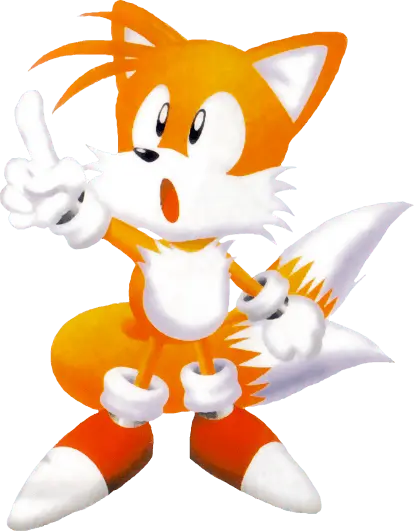
The two-tailed fox, and the big winner of the sequel. Both manuals make the same point in different ways: the boy who was once teased for his tails and trailed after Sonic has come of age, and is now his partner rather than his sidekick.
The second playable hero, and this time he can collect the Emeralds too. He also gets the Sea Fox, his own submarine, in Tidal Plant.
Propeller flight: Up + 1 or 2, looser than in Sonic Chaos
Can take off again after bouncing off a spring
Spin Dash
Hyper Heli-Tails power-up and the Sea Fox
3 lives and 1 continue
Knuckles the EchidnaRival · first Game Gear appearance
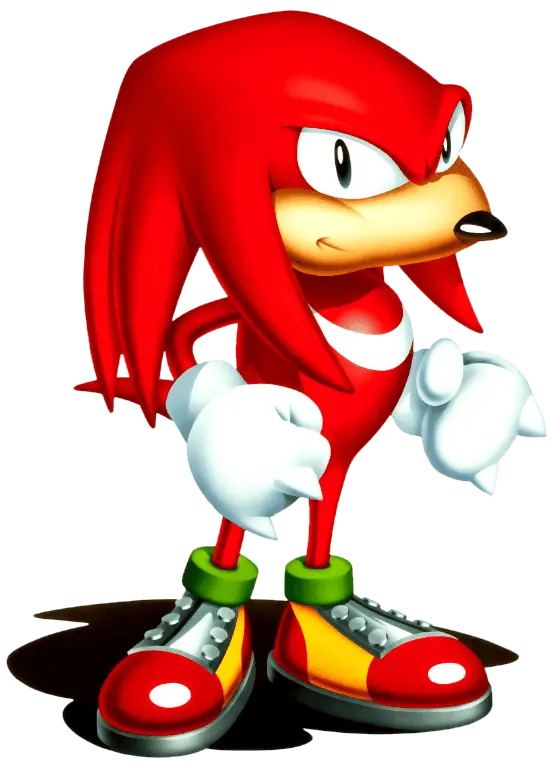
The Emerald guardian of the Floating Island (Angel Island, as it is now known), introduced earlier in 1994 in Sonic the Hedgehog 3, and on his first Game Gear outing. The Japanese manual, which calls him “Knuckle”, paints him as a hothead with a good heart; the American one lists his tricks: Spin Dash, gliding, digging and climbing.
Eggman convinces him that the hedgehog and the fox want the Emeralds so they can rule the world, so he dogs them all game long and finally fights them as the Tidal Plant boss. He is fooled, not wicked.
Boss of Tidal Plant Zone
The manual credits him with the Spin Dash, the Power Glide and the strength to tunnel and climb
Not playable
Fang the SniperNack the Weasel in the West · debut
The new face, and the scene-stealer. A purple treasure hunter in an explorer’s hat (he collects shiny things), with a big fang, a bouncy tail and a flying bike he adores. His Japanese profile has him as a sly cheapskate whose clever schemes tend to backfire. How he got his name and species is a story in itself, told in How it was made.
He grabs the scattered Emeralds and stashes them in subspace to sell, and harasses the heroes on his prized flying bike. He is fought as a boss along the way.
Rides a flying bike
Bounces on his tail
Four fingers, from his jerboa design
Not playable
Metal SonicEggman’s robot double
Eggman’s mechanical copy of Sonic, introduced in Sonic CD in 1993. The Japanese manual calls him the doctor’s handmade ultimate robot.
Eggman’s trump card, one of the bosses Sonic and Tails must beat on the way to the doctor.
Boss. Has his own music track in the sound test.
Dr. EggmanDr. Robotnik in the West
The usual evil genius. The Japanese manual notes, with some glee, that this time he is a little put out: he only has to face Sonic because of his own blunder.
His weapon test scatters the Emeralds. He keeps one, tricks Knuckles, builds the Atomic Destroyer and waits at the end of it.
Final boss of the Atomic Destroyer
Holds the sixth Emerald
Badniks and bosses
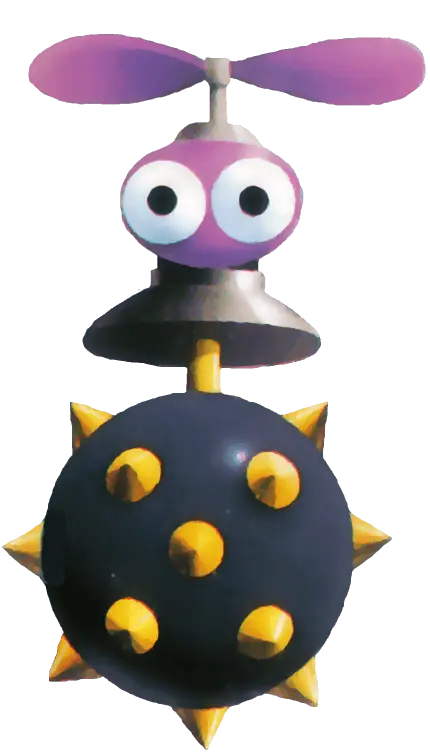
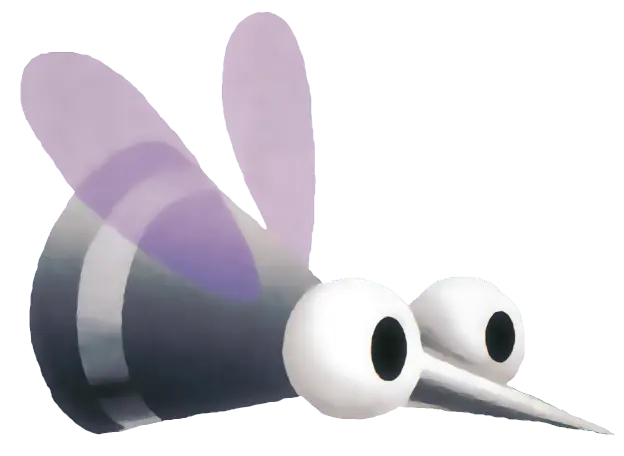
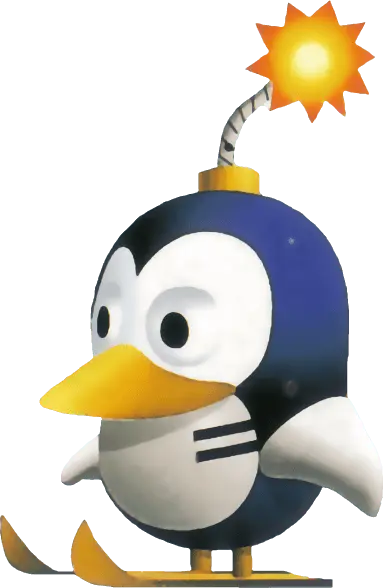
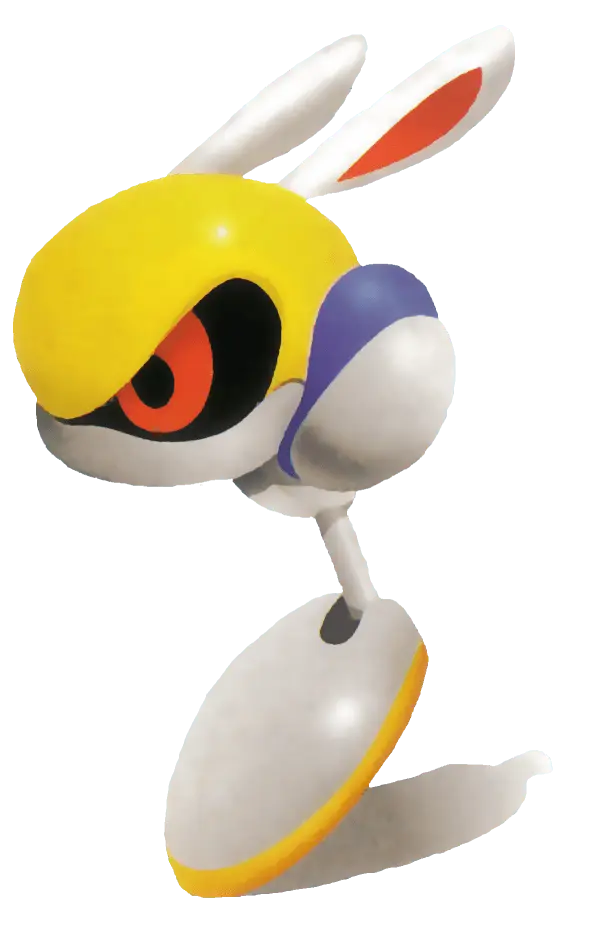
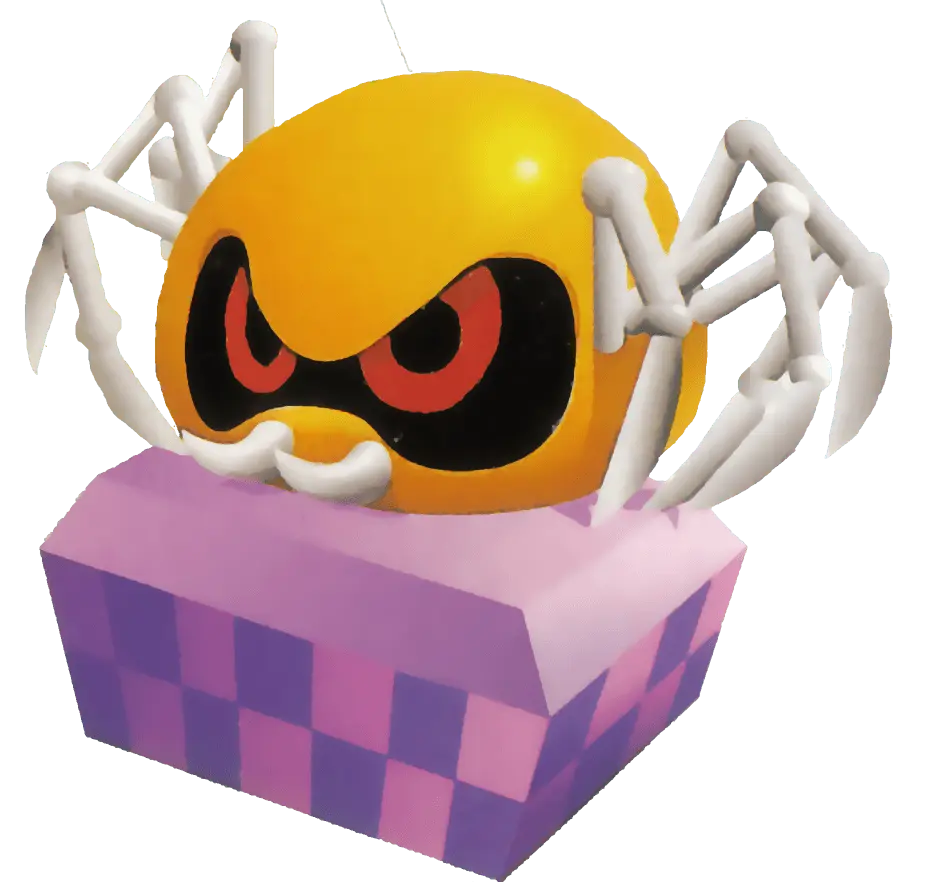
Triple Trouble’s robots include Penguin Bomber, Kameka, Spidal Tap and Ridal Tap, Bombaberry and Bomblur, Rabibin, Springshell, Eeliotte, Ladybuggy and the returning Mecha Hiyoko. Pictures are Sega’s artwork from our original gallery (some of it concept art) and screenshots.
BombaberryBadnikA spiked bomb hanging from a little propeller.
KamekaBadnikA flying insect-bot with a long proboscis.
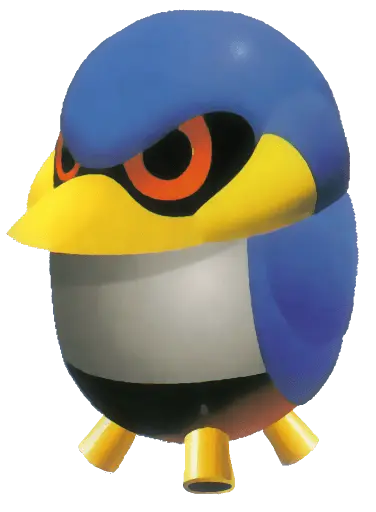
Penguin BomberBadnikA penguin with a lit fuse on its head.
RabibinBadnikA yellow, rabbit-eared robot.
Spidal TapBadnikA spider-legged robot.
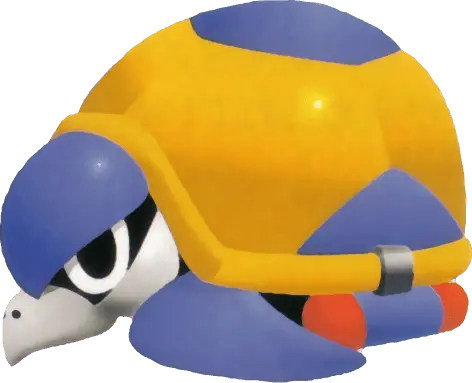
Tart TurtleBoss · Great TurquoiseCurl up after a spring to hit it.
Wood ButtarundorfBoss · Meta JungliraThe jungle zone’s guardian.
Giga Thomas “Pen”Boss · Robotnik WinterA giant penguin machine.
KnucklesBoss · Tidal PlantThe echidna, fighting for the wrong side.
Atomic Destroyer bossesFinal zoneA run of fights ending with Eggman himself.
The people who made it
Aspect again, crediting most of the team by initials. Three names stand out.
M.Hoko & K.HaseProducer & directorLed the project, as credited in the staff roll.
Tadashi IhoroiPlanning and setting (T.Ihoroi)Wrote the set-up and gave Fang his personality.
Shinichi HigashiCharacter designDesigned Fang, the first character he created for Sega. The staff roll lists an S.Higasi.
Yayoi.FComposerWrote the soundtrack; Sunset Park Act 3 reuses an unheard tune from Sonic Chaos.
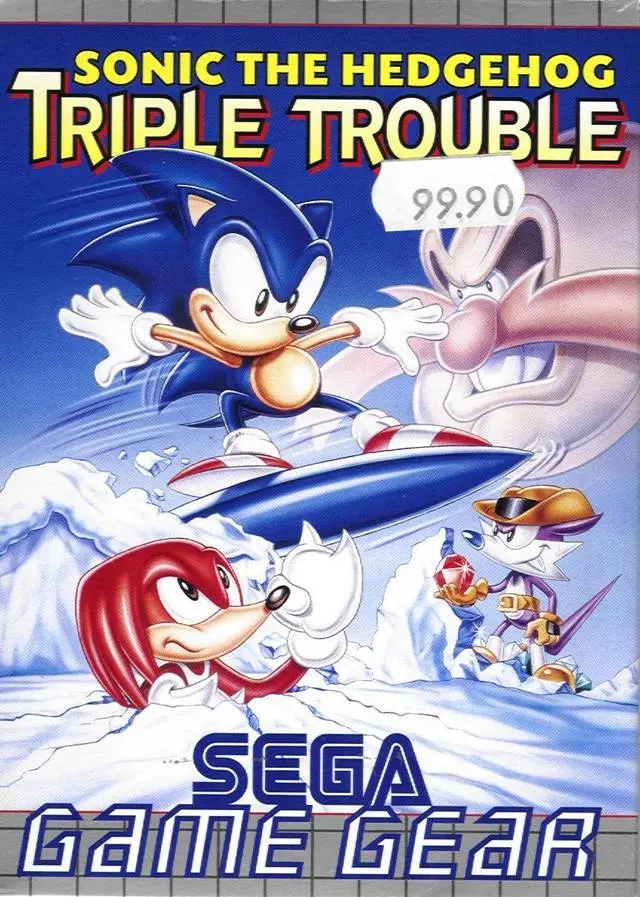
Greg MartinCover art (preliminary)His early box art and a cover sketch featuring Knuckles survive.
How it was made
Our original page had no history section; this one is new.
From Sonic Chaos 2 to Game Gear exclusive
Pre-release screenshots caught a different game: Sonic surfing through Great Turquoise (in the finished game he only rides a board, in Robotnik Winter), a Peel-Out with a yellow trail, other colours, and Nack pulling a gun, something he never does in the final version. Two prototypes from August 1994 survive.
The plan changed too. In the West the game went by Sonic Chaos 2 while it was meant for both the Master System and the Game Gear, but only the handheld version was released, which made Triple Trouble the first Sonic platformer exclusive to the Game Gear.
A rival with three names
Fang the Sniper.
Fang was Shinichi Higashi’s first character for Sega, drawn with Naoto Ohshima’s blessing, while the game’s planner, Tadashi Ihoroi, worked out his personality as a treasure hunter. Higashi drew a jerboa, hence the four fingers (recent artwork gives him five), but the marketing never quite agreed, billing him in Japan as a jerboa-wolf cross and in the West as a weasel. Only Sonic Superstars settled it in the jerboa’s favour.
The names were just as unsettled. Nack, his name during development, sounded too much like Knuckles in Japanese, so Famicom Tsushin ran a naming contest and readers picked Fang the Sniper; the Western releases called him Nack the Weasel all the same. Later games used Fang everywhere, Superstars made him Fang the Hunter, and a tie-in comic explained the old names away as aliases.
The box
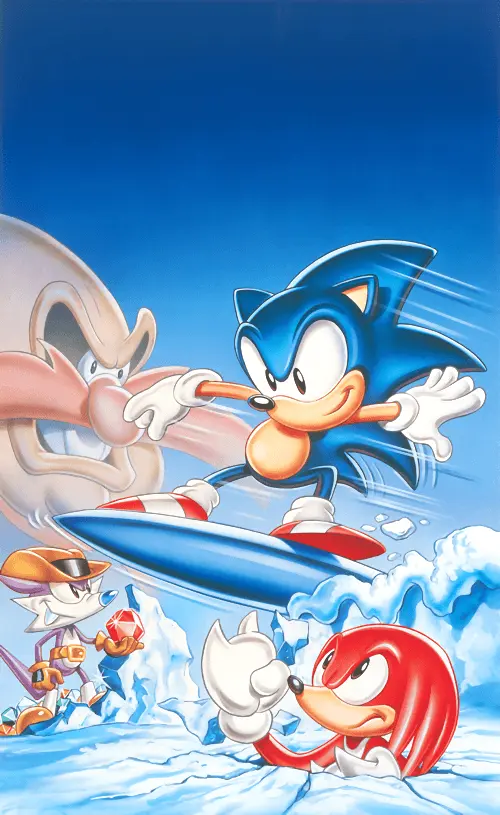
Greg Martin painted preliminary box art for the Western release, and a sketch of his with Knuckles on the cover survives too.
Firsts: what this game introduced
Aspect’s third 8-bit platformer brought plenty of its own.
1Fang the SniperDebut of the treasure hunter later seen in Sonic the Fighters and Sonic Superstars.
2Knuckles on the Game GearThe first Game Gear game to feature the echidna.
3Partial ring lossThe first Sonic game where a hit does not cost every ring: 30 for most hits, 50 for spikes.
4More than 99 ringsUnlike the earlier 8-bit games, the counter no longer rolls over at 100.
5Emeralds for both heroesSonic and Tails can each enter the Special Stages and win the Emeralds.
6The Tornado in 3DTwo Special Stages put you at the controls of the biplane, collecting rings in 3D.
7The Sea FoxTails’ submarine, later a big part of Tails Adventure.
8Gadgets galoreJet Board, Propeller Shoes and Hyper Heli-Tails join the Rocket Shoes and Pogo Spring.
9Time Attack on the Game GearThe handheld’s first Sonic Time Attack mode (Sonic CD had one on the Mega-CD), with a stage of its own.
Cheats & secrets
Triple Trouble has one famous code and a few extra modes on the title screen. Our original page had no cheats; this section is new.
Zone select
Hold Up while switching the Game Gear on, and keep holding it. As the opening plays, press Start at the exact moment Knuckles snatches Emerald number three. If you hear a ring, choose your character and the zone select appears.
Extra modes
Press Up or Down on the title screen. Time Attack races you through a stage made just for this mode, Great Turquoise scenery with Sunset Park’s roller-coaster carts. The sound test plays the music and effects. The Japanese version adds 3D Stage, which jumps straight into the second Special Stage and ends when you collect 80 rings.
Checked against Sonic Retro, November 2026.
Glitches, exploits and oddities
Sonic Retro’s bug notes for Triple Trouble are not archived, so this section sticks to the documented oddities and leftovers.
Nack’s missing Bonus Panel
Time Attack mode.Screenshot via Sonic Retro
The Bonus Panel has faces for Flicky, Sonic, Tails and Knuckles, but the cartridge also holds an unused panel with Nack on it. It might have been a prize, or a hint that he was once meant to be playable.
Unused sprites
Knuckles has hurt or tired gliding frames that are never shown, and Nack has blinking frames and a sprite of him holding a Chaos Emerald, none of which appear in normal play.
The missing jingle
The short tune on the Try Again screen is the only piece of music missing from the sound test. Its number would have been A3, which you can only reach by poking the console’s memory.
Slowdown
The game slows down at times, and GamePro’s review complained that it led to cheap deaths.
Two build dates
Like Aspect’s other Sonic games, the cartridge carries a build stamp at address $C0: 30 July 1994 for the Japanese Sonic & Tails and 2 August 1994 for the Western version.
Videos & media
IGN’s trailer for the 2012 Nintendo 3DS release, and a full Game Gear playthrough that collects every Emerald.
IGN’s trailer for the Nintendo 3DS Virtual Console release (March 2012).
A complete Game Gear playthrough with all the Emeralds, from the World of Longplays archive.
Trivia & facts
In Japan the game is Sonic & Tails 2, the sequel to Sonic & Tails (Sonic Chaos).
Robotnik Winter.Robotnik Winter is called Robotnik Winter in Japan too, from before “Robotnik” was accepted there as Eggman’s surname.
Sunset Park Act 3’s music is a track written for the Game Gear Sonic Chaos but never used there, played a little lower.
The Western manuals set the game on Mobius, the name Sega of America then used for Sonic’s world.
Fang has four fingers rather than the usual five, a nod to the jerboa he was drawn as. More recent artwork gives him five.
Sonic Superstars (2023) officially settled things: he is Fang the Hunter, and a jerboa.
The Atomic Destroyer zone is, according to the American manual, a superweapon in its own right.
Media & artwork
Box art, artwork and screenshots, mostly from Sonic Scene’s own galleries. Select any image to view it larger.
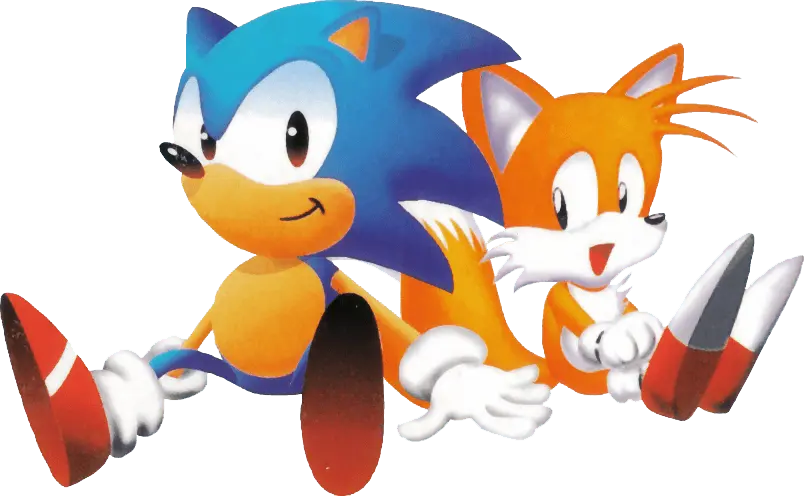
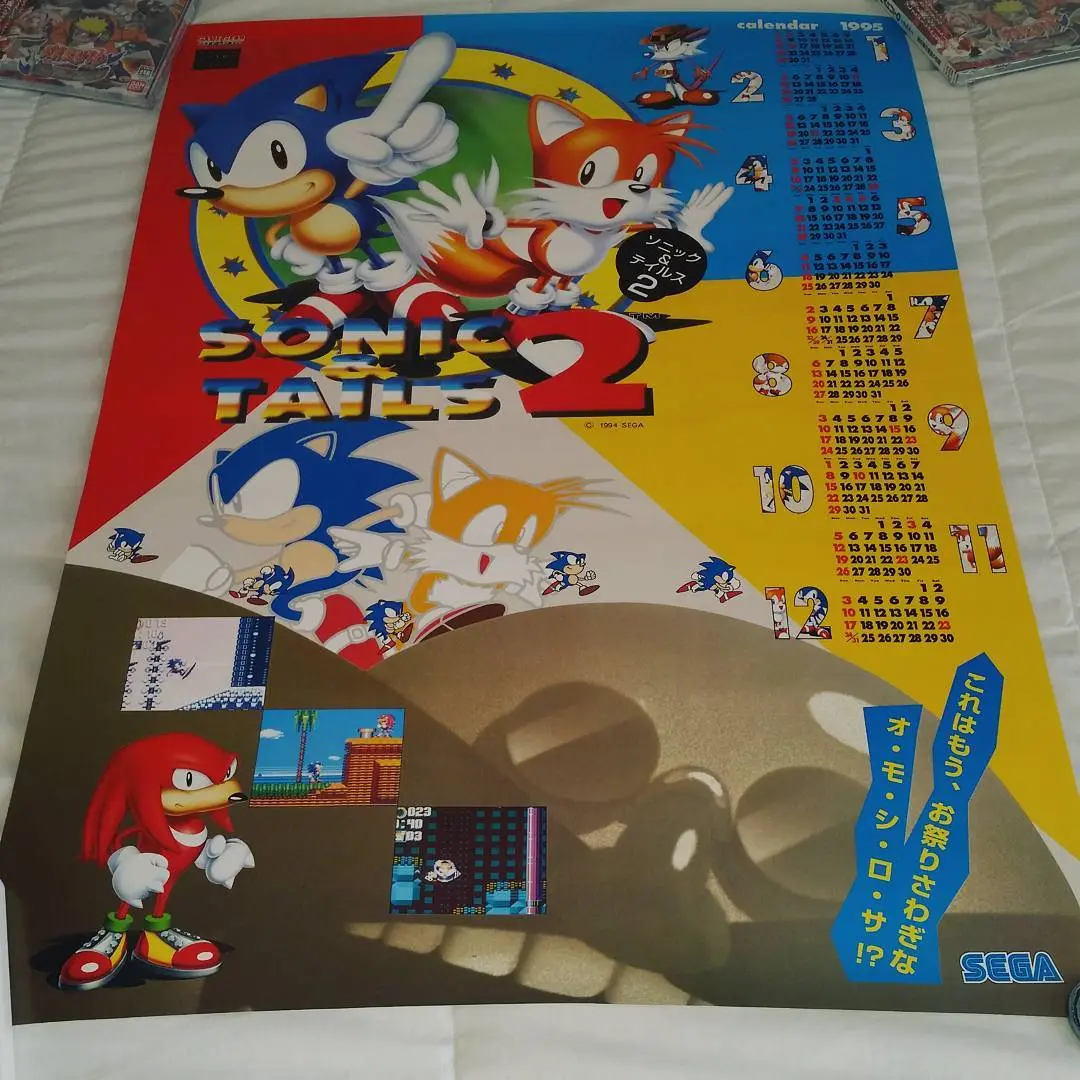
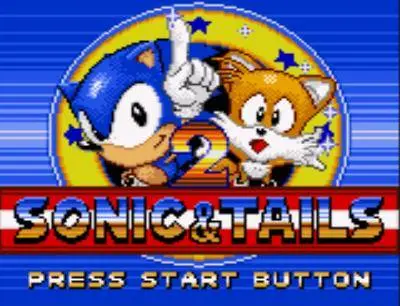
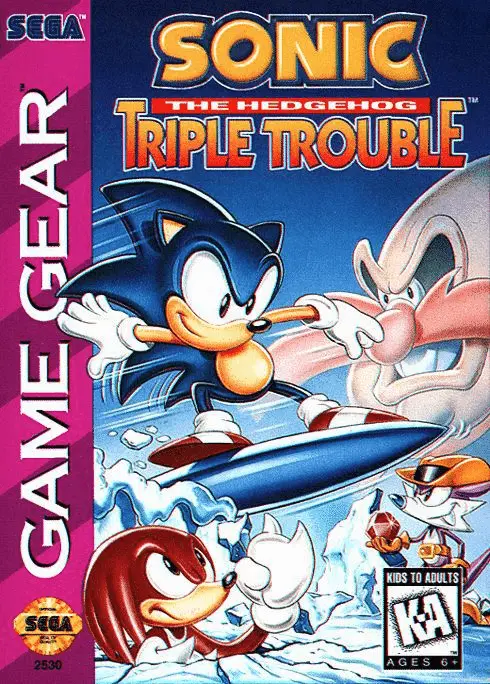
North American box.Japanese Sonic & Tails 2 box.Game Gear box.Back of the box.Triple Trouble artwork.Sonic and Tails.Sonic and Tails.Sonic, 1994.Sonic & Tails 2 logo.North American logo.3DS Virtual Console banner.Japanese poster.Japanese title screen.Player select.Great Turquoise.The Sunset Park train.
Triple Trouble was Aspect’s third Sonic platformer; one more, Sonic Blast, followed in 1996. Its biggest legacy is Fang, who went on to Sonic the Fighters and, nearly three decades later, Sonic Superstars.
Releases and re-releases
Game Gear (Japan)11 November 1994 – As Sonic & Tails 2.
Game Gear (North America, Europe)November 1994 – As Sonic the Hedgehog: Triple Trouble.
BrazilOctober 1995 – Released by Tec Toy.
Sonic Adventure DX: Director’s Cut2003–2004 – GameCube and PC.
Sonic Gems Collection2005 – GameCube and PlayStation 2.
Sonic PC Collection2009 – PC.
Nintendo 3DS Virtual ConsoleMarch 2012 – Emulated by M2.
Sonic Origins Plus23 June 2023 – One of twelve Game Gear games.
A fan favourite
Fans have kept coming back to it. Fan tributes include an unofficial Master System conversion and a 16-bit-style fan remake.
Where to play it today
Sonic Origins Plus (2023) includes it on PlayStation, Xbox, Nintendo Switch and PC. Check what is still on sale on your platform.
Sales & reviews
Sales
Sega Retro lists no sales figures for Triple Trouble and we have not found a reliable one, so we do not give one here.
79%Sega Retro average (28 reviews)
100%Electronic Games
87%Sonic the Comic
85%Mean Machines Sega
Reception and review scores
Period reviews from Sega Retro’s index of magazine scans; scores that were not out of 100 are shown as Sega Retro converts them.
Electronic GamesUS · May 1995
100%
GamerGreece · January 1995
94%
Console ManiaItaly · January 1995
92%
Games World: The MagazineUK · November 1994
89%
Mega ForceFrance · December 1994
88%
Sonic the ComicUK · 20 January 1995
87%
Sega MagazinGermany · December 1994
87%
Mean Machines SegaUK · December 1994
85%
GameProUS · November 1994 (converted)
75%
Sega PowerUK · February 1995
73%
Sega MagazineUK · November 1994
71%
Sega ProUK · January 1995
71%
Computer & Video GamesUK · December 1994
68%
Electronic Gaming MonthlyUS · November 1994 (converted)
68%
Weekly FamitsuJapan · November 1994 (converted)
53%
Triple Trouble split the critics. Electronic Games gave it a perfect score and several European magazines rated it in the high 80s, but Sega Power, Sega Pro and C&VG were lukewarm, and in Japan Famitsu gave it 21 out of 40. GamePro liked the graphics and new ideas but thought it too easy and found the slowdown costly. Later reviews of the re-releases were mixed too, with Nintendo Life giving the 3DS version 6 out of 10.
Reader reviews
No reader reviews yet. Played it? Give it a score out of 10 and tell other fans what you think.
Every fact on this page was checked against the sources below (Sonic Retro pages were read through Wayback Machine copies from December 2024 to February 2025, because the live site shows a bot check; each link opens the nearest archived copy). Magazine scores come from Sega Retro’s review index, which links each score to a scan of the original page.
To provide the best experiences, we use technologies like cookies to store and/or access device information. Consenting to these technologies will allow us to process data such as browsing behavior or unique IDs on this site. Not consenting or withdrawing consent, may adversely affect certain features and functions.
Functional
Always active
The technical storage or access is strictly necessary for the legitimate purpose of enabling the use of a specific service explicitly requested by the subscriber or user, or for the sole purpose of carrying out the transmission of a communication over an electronic communications network.
Preferences
The technical storage or access is necessary for the legitimate purpose of storing preferences that are not requested by the subscriber or user.
Statistics
The technical storage or access that is used exclusively for statistical purposes.The technical storage or access that is used exclusively for anonymous statistical purposes. Without a subpoena, voluntary compliance on the part of your Internet Service Provider, or additional records from a third party, information stored or retrieved for this purpose alone cannot usually be used to identify you.
Marketing
The technical storage or access is required to create user profiles to send advertising, or to track the user on a website or across several websites for similar marketing purposes.
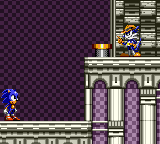
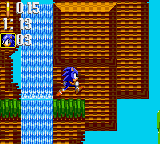 Great Turquoise ZoneActs 1–3 · boss: Tart TurtleThe opener keeps its secrets up high, because the palm-tree tops are springs. In Act 1 the Emerald monitor sits right at the top of the end of the act, and bouncing through the trees is the way up.
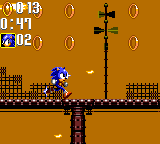 Sunset Park ZoneActs 1–3 · boss: Marve Shupopolus-GouA theme park gone to seed. Knock a Ladybuggy out of its coaster car and drive it yourself, through walls and spikes alike. Act 2 has the strangest finish in the game: you step onto a robot freight train, spin the Bonus Panel on its roof and roll straight into Act 3.
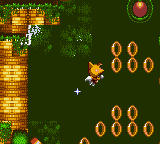 Meta Junglira ZoneActs 1–3 · boss: Wood ButtarundorfThe name probably plays on Shangri-La, but nothing here is restful. Keep hopping through the swamp mud or it swallows you, and expect the glass balls in the trees to bat you back down.
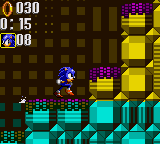 Tidal Plant ZoneActs 1–3 · boss: KnucklesEggman’s tidal power station, probably there to run the Atomic Destroyer. The fun is in the kit: Propeller Shoes let Sonic swim for a while, and Tails drives the Sea Fox, the submarine that went on to star in Tails Adventures.
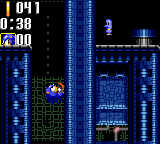 Atomic Destroyer ZoneActs 1–3 · boss: Dr. EggmanThe weapon itself. Tube mazes keep dropping you onto switches that start Mecha Hiyoko generators, and Act 3 is one boss after another.
 Sonic the HedgehogPlayable hero
 Miles “Tails” ProwerPlayable hero
 Knuckles the EchidnaRival · first Game Gear appearance
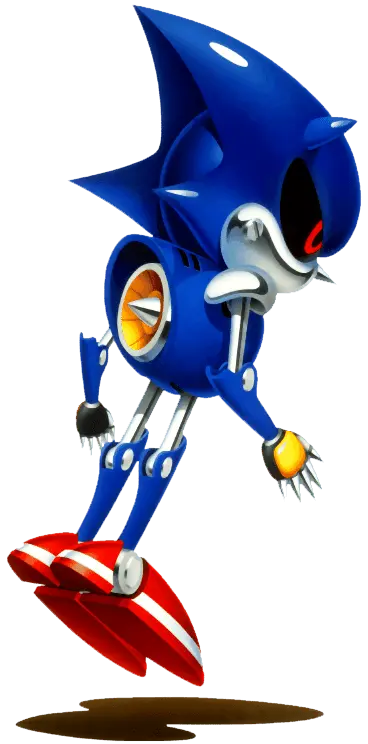 Metal SonicEggman’s robot double
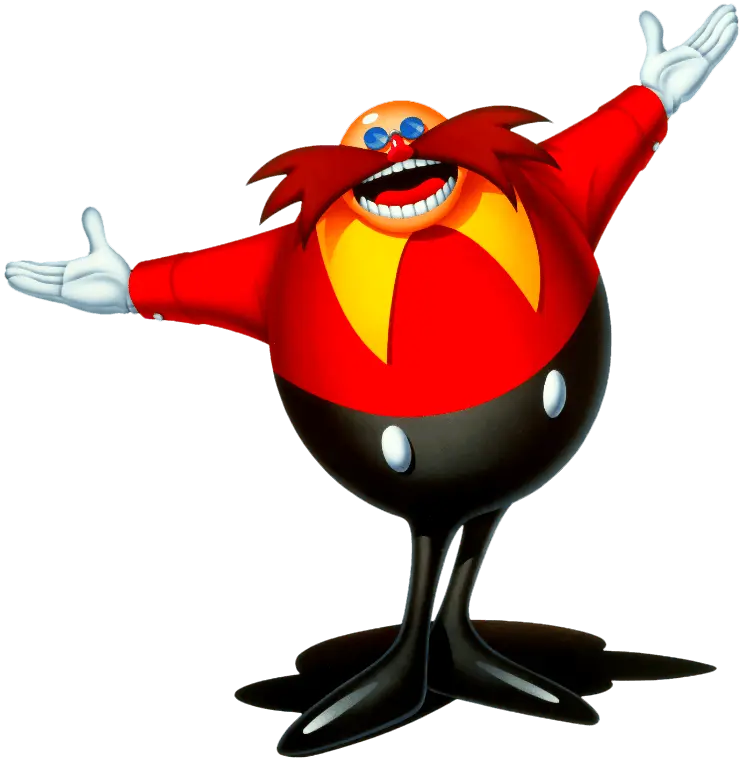 Dr. EggmanDr. Robotnik in the West
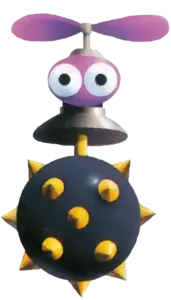 BombaberryBadnikA spiked bomb hanging from a little propeller.
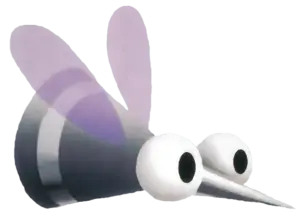 KamekaBadnikA flying insect-bot with a long proboscis.
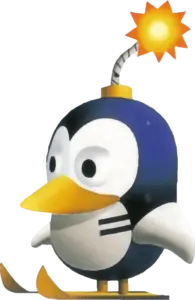 Penguin BomberBadnikA penguin with a lit fuse on its head.
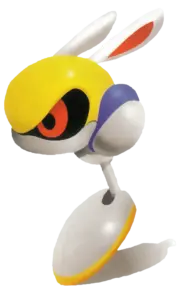 RabibinBadnikA yellow, rabbit-eared robot.
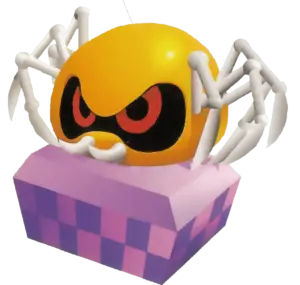 Spidal TapBadnikA spider-legged robot.
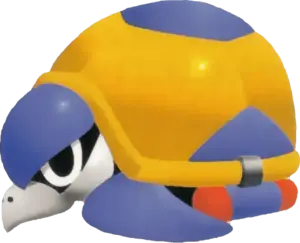 Tart TurtleBoss · Great TurquoiseCurl up after a spring to hit it.
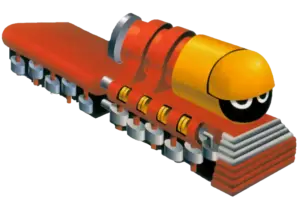 Marve Shupopolus-GouBoss · Sunset ParkEggman’s armoured train.
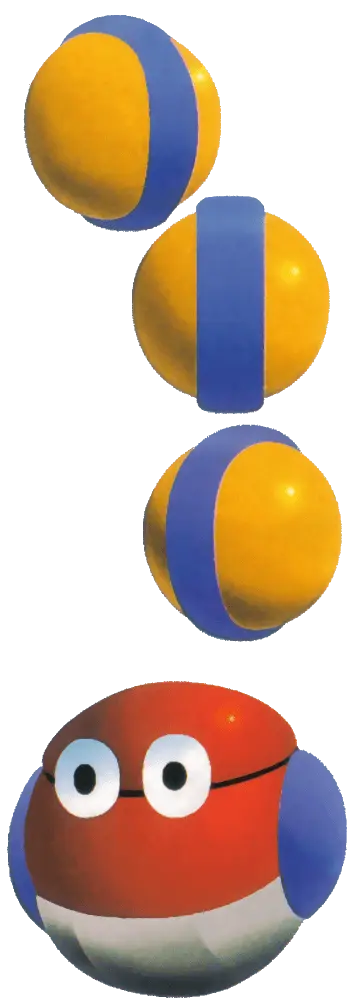 Wood ButtarundorfBoss · Meta JungliraThe jungle zone’s guardian.
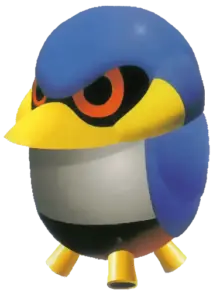 Giga Thomas “Pen”Boss · Robotnik WinterA giant penguin machine.
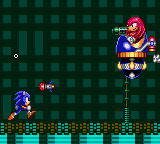 KnucklesBoss · Tidal PlantThe echidna, fighting for the wrong side.
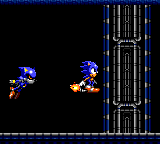 Atomic Destroyer bossesFinal zoneA run of fights ending with Eggman himself.